

As a supplier of the Front Apron S, I've had the privilege of closely observing how this product performs in various environmental conditions. Cold weather, in particular, presents a unique set of challenges for automotive components, and the Front Apron S is no exception. In this blog, I'll delve into the performance of the Front Apron S in cold weather, drawing on real - world experience and industry knowledge.
Material Properties and Cold Weather
The Front Apron S is crafted from high - quality materials carefully selected for their durability and resilience. In cold weather, the material's properties play a crucial role in determining its performance. Most Front Apron S products are made from a blend of polymers and composites that are engineered to withstand low temperatures.
Polymers, such as polypropylene and polyurethane, have different responses to cold. Polypropylene, for example, can become more brittle in extremely cold conditions. However, the Front Apron S uses a specially formulated polypropylene that has been modified to maintain its flexibility even at low temperatures. This is achieved through a process called copolymerization, where additional monomers are added to the polymer chain to enhance its cold - weather performance.
Composites, on the other hand, are a combination of different materials, often including fibers for added strength. The fibers in the Front Apron S composites act as reinforcement, preventing cracks from spreading in cold weather. When the temperature drops, the fibers help to distribute stress evenly across the apron, reducing the risk of breakage.
Impact Resistance in Cold Weather
One of the most critical aspects of the Front Apron S's performance in cold weather is its impact resistance. In winter, roads are often covered with ice, snow, and slush, and vehicles are more likely to encounter debris. A Front Apron S with poor impact resistance can crack or shatter upon impact, leaving the vehicle vulnerable.
Our Front Apron S is designed to maintain its impact resistance in cold temperatures. Through extensive testing in cold - chamber environments, we've ensured that the apron can withstand impacts from small stones, ice chunks, and other road debris. The material's ability to absorb and dissipate energy upon impact is maintained, thanks to its carefully engineered molecular structure.
For instance, when a small stone hits the Front Apron S in cold weather, the material flexes slightly to absorb the impact energy. The internal structure of the polymer and composite materials redistributes the energy, preventing it from concentrating in one area and causing a crack. This is a significant advantage compared to some lower - quality aprons that may become brittle and break easily in cold conditions.
Fit and Installation in Cold Weather
Another factor to consider is the fit and installation of the Front Apron S in cold weather. Cold temperatures can cause materials to contract, which may affect the apron's fit. However, our Front Apron S is designed with precise tolerances to ensure a proper fit even in cold conditions.
During the manufacturing process, we take into account the thermal expansion and contraction properties of the materials. The apron is pre - shaped to account for the slight shrinkage that occurs in cold weather. This means that when installed in winter, the Front Apron S will still align perfectly with the vehicle's body, providing a seamless and secure fit.
In addition, the installation process is straightforward, even in cold weather. The mounting points are designed to be easily accessible, and the fasteners are made from materials that are resistant to corrosion and cold - induced degradation. This ensures that the apron can be installed quickly and securely, regardless of the temperature outside.
Aesthetic Performance in Cold Weather
The Front Apron S not only serves a functional purpose but also contributes to the vehicle's aesthetic appeal. In cold weather, factors such as fading, discoloration, and surface cracking can affect its appearance.
Our Front Apron S is treated with special coatings that protect it from the harsh effects of cold weather. These coatings are UV - resistant and can prevent the apron from fading over time. They also provide a barrier against moisture, which can cause discoloration and rusting.

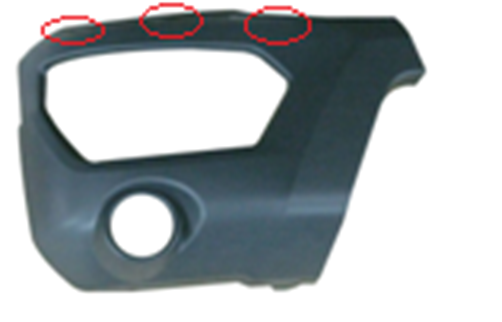
The surface finish of the Front Apron S is smooth and resistant to cracking. Even in cold weather, when the material contracts, the coating helps to maintain the apron's integrity, ensuring that it looks as good as new. This is important for vehicle owners who want their vehicles to look presentable throughout the winter months.
Compatibility with Other Vehicle Parts
The Front Apron S is designed to be compatible with other vehicle parts, especially in cold weather. It works in harmony with components such as the Front Panel s for Hino, SIDE BUMPER W/HOLE FOR UPPER TRIM , RH&LH (LOW), and GRILLE (UPPER).
In cold weather, the interaction between different parts becomes even more crucial. For example, the Front Apron S needs to align properly with the front panel to ensure that there are no gaps where snow or ice can accumulate. Our products are engineered to fit together precisely, regardless of the temperature. This not only enhances the vehicle's overall appearance but also improves its aerodynamics and protection.
Long - Term Performance in Cold Weather
Over the long term, the Front Apron S is built to withstand the repeated cycles of cold and thaw that occur during winter. The materials used in its construction are resistant to fatigue, which means that they can endure the stress of temperature changes without losing their properties.
Regular exposure to cold weather can cause some materials to degrade over time. However, the Front Apron S's advanced design and high - quality materials ensure that it remains in good condition for an extended period. This reduces the need for frequent replacements, saving vehicle owners both time and money.
Conclusion
In conclusion, the Front Apron S performs exceptionally well in cold weather. Its carefully selected materials, high - impact resistance, precise fit, aesthetic appeal, compatibility with other vehicle parts, and long - term durability make it an ideal choice for vehicles operating in cold climates.
If you're interested in purchasing the Front Apron S for your vehicle or have any questions about its performance in cold weather, I encourage you to reach out for a procurement discussion. Our team of experts is ready to assist you in finding the best solution for your needs.
References
- Automotive Materials Handbook: Polymer Composites, ASM International
- Cold Weather Performance Testing of Automotive Exterior Components, SAE International